
What is Tether (USDT)? How It Works, Uses and Future
- Inocyx
- October 13, 2026
- Cryptocurrencies
- Crypto Stablecoin, Cryptocurrency for Beginners, Future of Stablecoins, Future of Tether, How Tether Works, Purpose of Tether USDT, Purpose of USDT, Stablecoin for Beginners, Stablecoins Explained, Tether Benefits, Tether Cryptocurrency, Tether Market Value, Tether Risks, Tether Stablecoin, Tether USDT, USDT Blockchain, USDT Cross-Border Payments, USDT ERC-20, USDT Guide, USDT in Crypto Trading, USDT in DeFi, USDT Meaning, USDT on Ethereum, USDT on Tron, USDT Stablecoin, USDT TRC-20, USDT Uses, What Is Tether, What Is Tether (USDT), What Is USDT Used For
- 0 Comments
Introduction to Tether and Its Role in Crypt Trading
If you have traded crypt, then you are definitely aware of such a cryptocurrency as Tether. But some may ask themselves, what is Tether? What makes it so popular among the rest of the cryptocurrencies?
Tether (USDT) is a kind of stable cryptocurrency that helps to avoid volatility issues in the financial market. All other cryptocurrencies may have different prices due to fluctuations, but in the case of the Tether stablecoin, it will not change its price, as it is pegged to the US dollar.
This is precisely where the importance of the purpose of Tether USDT comes into play.
What is Tether (USDT) and How Does It Work
The USDT meaning is that it is a digital form of the US dollar. Tether (USDT) is a crypt stablecoin based on the valuation of the US dollar, implying that 1 USDT = 1 USD.
How does Tether work?
- It is a stablecoin that creates USDT tokens using reserves.
- The reserves consist of cash, cash-equivalent, and other assets.
- On-demand basis, minting occurs when there is an increase in demand for USDT tokens.
- Token burning happens if the user redeems USDT.
Thus, the purpose of USDT is maintaining stability, which is always fulfilled.
While other cryptocurrencies are quite volatile, the Tether stablecoin is regarded as one of the most stable cryptocurrencies among all other cryptocurrencies.
Who Created Tether and Why Was It Developed
Tether was created by Brock Pierce, Reeve Collins, and Craig Sellers and is managed by Tether Limited.
Why was Tether developed?
Before the introduction of USDT, investors needed to exchange their cryptos for fiat money to prevent potential losses in the event of market collapses. This method was time-consuming and expensive.
The purpose of USDT was straightforward but effective:
- Ensure stability in an unstable market
- Enhance the speed of the transaction
- Reduce reliance on conventional banking systems
Thus, the Tether cryptocurrency gained prominence in the crypt space by addressing these issues.
When Was Tether Launched and How Has It Evolved
Tether was established in 2014 and initially operated as Realcoin. Subsequently, it was renamed USDT.
How has Tether evolved?
- Operating on multiple blockchain platforms
- Increased use worldwide
- Leading crypt stablecoin in terms of market capitalization
At present, the Tether market value is one of the highest in the whole cryptocurrency market.
What Technology Supports the Tether Stablecoin
Flexibility in Tether stablecoin is another significant advantage. Rather than using one blockchain, USDT uses several, namely:
Supported blockchains
Why this matters
- Quicker transactions
- Reduced transaction fees (especially for Tron)
- Increased compatibility with other systems
In this way, the multi-chain structure of the Tether cryptocurrency makes it convenient for users all around the world.
Growth of Tether’s Market Value
Tether’s market value has been growing exponentially over time. Having started as a small project, USDT became the largest stablecoin in the world.
Key growth factors
- Demand for stable assets
- Growing popularity of cryptocurrencies
- Usage in trading pairs
Currently, USDT ranks among the most traded cryptocurrencies according to the number of daily transactions. Moreover, many people prefer Tether to Bitcoin when trading cryptocurrencies.
It is important to note how relevant “What is Tether?” has become in modern times.
Why is Tether Important in the Cryptocurrency Market
The importance of the Tether stablecoin does not only lie in its stability. It serves as an important factor to ensure the efficiency of the cryptocurrency market.
Key benefits of USDT
- A refuge during times of uncertainty
- Serves as a source of liquidity on various platforms
- Facilitates trading
- Speeds up transactions
For investors, the purpose of USDT is obvious: USDT helps to make trading easier and safer.
It is difficult to imagine what the crypt market would be like without Tether cryptocurrency.
What Are the Real-World Uses of Tether
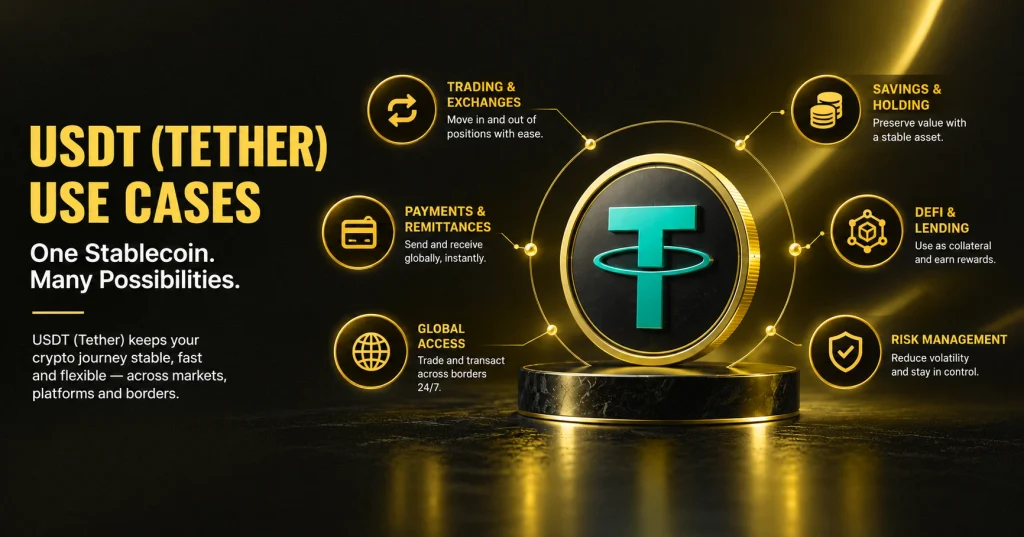
Even though trading is the most common function of cryptocurrency, Tether (USDT) has multiple uses in real life, which make it very valuable.
- Cryptocurrency Trading
Tether is one of the most popular cryptocurrencies for trading purposes.
- Cross-Border Money Transfer
The US dollar-pegged digital currency is cheaper and faster for money transfers between various countries than traditional banks.
- Store of Value
Tether stablecoin is widely used by individuals residing in nations where the currency is not stable.
- DeFi Applications
USDT is used in lending, borrowing, and earning interest on decentralized finance platforms.
- Payments and Business Applications
Many firms today accept Tether for payments because of its high stability.
All these applications demonstrate that the USDT meaning is not only in trading but also in many other spheres.
What is the Future of Tether and Stablecoins
The future of the stablecoin USDT is directly linked to the development of digital finance. The more people use cryptocurrencies, the higher the demand for the most stable cryptocurrencies will become.
Opportunities
- Combination with international payment systems
- Higher usage in developing countries
- Growing in the DeFi and Web3 environment
Challenges
- Increased regulatory pressure
- Lack of transparency
- Strong competition from other stablecoins
However, despite all these obstacles, the Tether cryptocurrency is bound to retain its leadership position. Early adoption and high market capitalization make it one of the most successful stablecoins.
Looking ahead, the future of stablecoins will undoubtedly revolutionize the global financial industry.

Conclusion
Now that you have learnt “What is Tether?”, it is time to understand why it matters to the crypt world.
Tether (USDT), which has made great changes in the crypt economy, has facilitated easy transactions and provided financial security. As a crypt stablecoin, it has become essential for everyone working in the crypt economy.
The importance of USDT as a crypt stablecoin, along with the rising Tether market value and the future of stablecoins, will play a major role in shaping the crypt economy in the coming years.
If you are entering the crypt market, it is necessary to understand the function of Tether (USDT).
EXPLORE NOW
FAQs
- What is Tether (USDT)?
Tether (USDT) is a crypt stablecoin created to keep its value consistent with the US dollar. The question ‘What is Tether?’ can be answered with the fact that it is the most reliable cryptocurrency for trade operations.
- How does Tether work?
Tether stablecoin functions through backing USDT with funds, which ensures that it has a consistent value and allows safer crypt operations.
- Who created Tether?
Tether was created by Brock Pierce, Reeve Collins, and Craig Sellers and is managed by Tether Limited.
- Why was Tether developed?
The purpose of USDT was to stop the huge price swings that happen in crypt. Traders could move money quickly without having to change it to regular currency by using a crypt stablecoin like Tether.
- How does Tether maintain a stable value?
The Tether stablecoin keeps its price stable by keeping reserves that are equal to the number of USDT tokens in circulation. This system helps USDT stay one of the most stable cryptocurrencies on the market today.
- When was Tether launched?
As you are researching what is Tether, it is essential to realize that Tether cryptocurrency was launched in 2014 and became one of the leading cryptocurrencies in the crypt stablecoin sector.
- What makes Tether different from other cryptocurrencies?
Unlike volatile coins, Tether cryptocurrency is a crypt stablecoin built for stability and smooth trading.
- What is Tether used for crypt trading?
Tether uses include trading, storing value, and quick transfers, making it essential for crypt traders.
Disclaimer: Crypt products and NFTs are unregulated and can be highly risky. There may be no regulatory recourse for any loss arising from such transactions.